
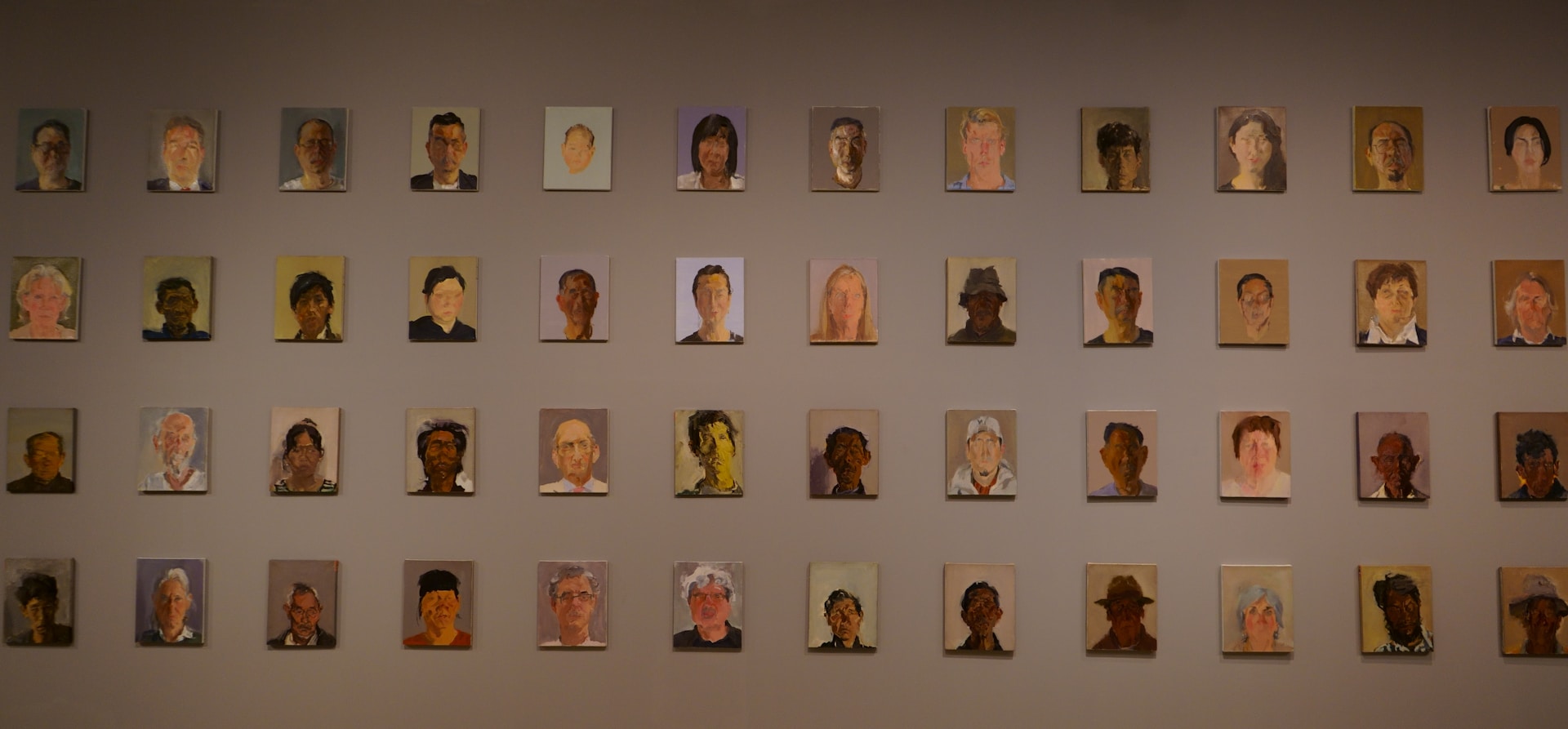
Photo by Yunshuo Qu on Unsplash
A sermon on Matthew 1:18-25
by Rev. Chris Bohnhoff
This week’s Advent theme – love – has been on my mind pretty much constantly this year. As a new church pastor in my first church year, everything has been fresh, open to interpretation, a series of new situations in which to practice love.
That’s my job in a nutshell, after all: to love y’all. Which sounds easy enough, just like the two core commandments in our tradition, to love God and love our neighbors as we love ourselves. It’s pretty easy to radiate love at coffee hour, and while appreciating our bell choir, and when talking about toy drives. But what does love look like as a preacher in a time of growing authoritarianism? In a Church Life meeting? On the pickleball court? Turns out, when you take the commandment to love seriously, identifying the most loving action to take is often less obvious than you’d expect.
Will you pray with me? Merciful God, as we step quietly through the themes on our Advent journey, we’ve saved the best for last: love. Yes, Joseph, Jesus’ dad, is an amazing model for what love looks like, but everywhere we look we see love. From trees that give each other nutrients when they sense a sickness in the forest, to inter-species relationships that keep ecosystems in balance, to the helpful bacteria that live on and inside us, we see a world held together by relationships of care and respect and mutuality. Help us as we do our best to honor your creation by claiming love as our guide, our North Star. Amen.
This week I read an article about two church pastors in Russian-occupied Ukraine. Since 2022, one fifth of Ukrainian territory has been occupied, and during that time there has been a crackdown against Christian churches not identifying as Russian Orthodox, including the Ukrainian Greek Catholic Church, which the Russians have designated an “extremist organization” and banned. Journalist Marc Roscoe Loustau writes, “Russian forces have destroyed, vandalized, or locked congregations out of their churches and confiscated the property. ‘Tens of thousands of [Protestant] believers have been forced to flee,’ Ukrainian investigative journalist Simon Ostrovsky told PBS NewsHour.”
Under threat, church pastors have fled the territory. But they are pastors, even in exile, still loving their congregations and communicating with them despite the very real dangers. They use encrypted apps, and even there avoid language that could bring Russian retribution if their conversations are hacked.
Loustau writes, “’There are some words that are better not to say out loud,’ said Roman Vovk, a Greek Catholic priest who had served in occupied Donetsk, when I asked him about conversations with former parishioners. Other vague or ambiguous words don’t need any clarification. ‘When we say the word they,’ Vovk says, ‘everyone knows who we’re talking about.’”
These exiled priests and pastors occupy a world of such complexity, called by God to love their flock and to minister to the marginalized. But what happens when providing that love to parishioners in need puts those parishioners in danger from the occupying forces? What happens when some of those former parishioners, to survive and make life livable, have become agents of the KGB? What is the loving thing to do? What path is love to take?
It’s a central question in today’s passage from our sacred history, this Jesus birth narrative through his father’s eyes. We hear that Joseph and Mary were engaged. What this means according to the traditions of their time is they would have been legally married but would not have consummated their arranged marriage until Joseph was able to pay Mary’s dowry to her family. Until then, they would have lived apart. It’s unclear how old Joseph was, but scholars say Mary would have been a teen, as young as twelve.
As Joseph works on providing payment to Mary’s family, he learns that Mary is pregnant. Now what? Under Jewish law, the penalty for a woman found guilty of adultery was death by stoning. But we hear that Joseph, “being a righteous man and unwilling to expose her to public disgrace, planned to divorce her quietly.” (1:19)
Now, wait a second, you might be thinking to yourself. This week is about love, and we’re talking about a guy opting to quietly walk away from his pregnant child bride rather than subject her to death? That’s the bar for love? That’s righteousness? A man in the lineage of David, the hero of Jewish heroes, the just and strong, this groom from a family of highest privilege? But wait.
Just as Joseph had made up his mind, the story tells us an angel appeared to Joseph in a dream and said, “Joseph, son of David, do not be afraid to take Mary as your wife, for the child conceived in her is from the Holy Spirit.“(1:20) Let’s break this down. The angel names Joseph’s privilege by referring to him as son of David and tells him not to be afraid to stick with Mary. If there’s one thing that squashes love, it’s fear: fear of what others will think, fear of doing the wrong thing, fear of a loss of our own security. But the angel says that fear is unwarranted, because God is behind Mary’s pregnancy. And as we’ve been told, Joseph is a righteous person – he follows God, loves God, listens when God speaks – so we know that this angel’s line of argument will cause Joseph to turn back to Mary. And it does. We know that in what comes next, Joseph’s actions are indeed quiet. But instead of walking away, he walks in, giving mercy, and giving over control and his own family privilege to this new thing God is doing.
Honestly, it still doesn’t feel all that impressive, compared to the overblown Hollywood love and redemption stories we’re used to – or compared to Mary’s beautiful Yes to being Jesus’ mother that we read last week. But there it is, a story that has survived for two millennia, a story of a good man choosing to stand by his new wife despite these deep questions about the nature of life and relationships and the sacred.
These intimate moments between one or two characters and God that are sprinkled throughout the Bible, for me, invest it with such wisdom, because they resonate with our own lives. The Bible speaks to us because, while none of us today are birthing the Messiah, we are most certainly battling our own privilege to follow God’s call into mercy and love in a messy world. Like the pastors exiled from occupied Ukraine, we enter fraught, complicated dynamics all the time with love to give, not knowing whether it’s safe to let it out, or how best to show it.
And with the news of this month and this week, our task is only getting more complicated. Pop-up ICE raids grow in prevalence and cruelty, calling us to find ways to love our fellow humans despite the personal danger. Attempts by the administration to make any gender-affirming care impossible call us to stand up with our trans siblings against such short-sighted, unjust, unscientific, harmful policies. Increasingly, we find ourselves in a time and place that once felt so far removed from occupied Ukraine and Palestine, creeping into our neighborhoods, schools, and homes.
At its heart, the New Testament is a liberation story, but the liberation isn’t a glamorous or dramatic one. After all, Jesus didn’t liberate Israel from the Romans. The liberation on offer is from fear. Like Joseph, God calls US to let go of our fear. God tells us that the weak, vulnerable thing being birthed is there by the grace of God’s Spirit. And its survival depends on our mercy. Like the Ukrainian pastors giving care from afar, we hear that a cast of characters conspired to foil Herod’s plans to do an infant harm and get him out of harm’s way to eventually do his history-changing work.
And now, the Herods of our time threaten all people on the margins: the foreigner, the poor, the nonbinary, the black and brown. May we give thanks for our spiritual ancestors who model the unglamourous forms of love that have preserved life, that have modeled quiet righteousness. May we follow their path to the humble stable. May our actions be the mercy needed to keep God’s hopes for humanity alive. Amen.
Leave a Reply